





BSRIA topic guide on mould in buildings TG 26/2024
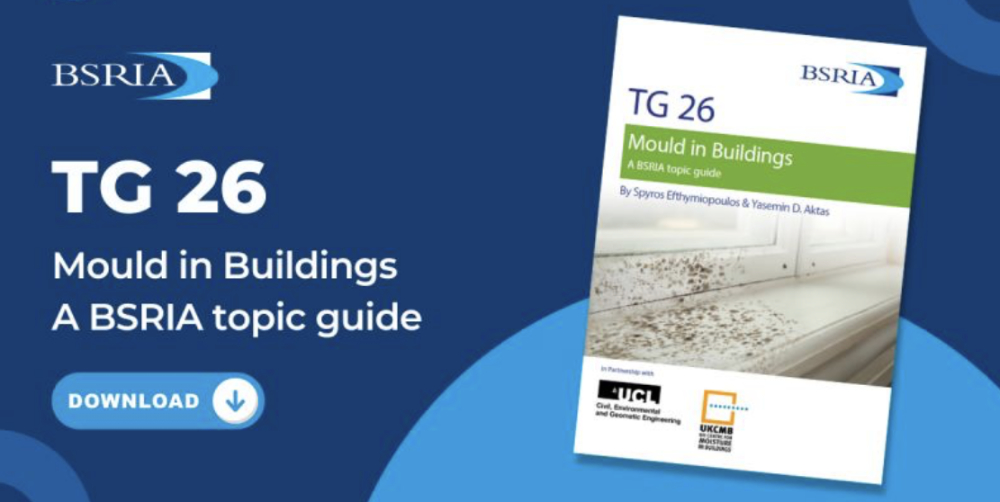
Mould and dampness constitute an issue that affects millions of buildings every year. This BSRIA topic guide gives an overview of how mould occurs in buildings, how it can be diagnosed and what mitigation strategies can be put in place.
Mould and dampness constitute an issue that affects millions of buildings every year. Dampness refers to signs of water damage on building materials due to excess moisture in the air or within the materials. On the other hand, moulds are living microorganisms that grow on surfaces forming darker spots and can move through the air.
This BSRIA topic guide includes sections on:
- Determinants of mould in a building context
- Mould diagnostics
- Mould mitigation strategies
It is published in partnership with the UK Centre for Moisture in Buildings (UKCMB) and UCL Department of Civil, Environmental and Geomatic Engineering (CEGE).
The guide is available to download here.
BSRIA, in conjunction with UKCMB and UCL-CEGE will be delivering a webinar on mould in buildings on 5th February 2025 13:00-14:00. For more information including registration, click here.
This article first appeared on the BSRIA news and blogsite as 'Mould in Buildings (TG 26/2024)' in January 2025.
--BSRIA
[edit] Related articles on Designing Buildings
- Approved Document C.
- Condensation.
- Damp and timber report.
- Damp proofing.
- Degradation of construction materials.
- Dry rot fungus.
- Humidity.
- Mould growth in buildings.
- Moulds in historic buildings.
- Moisture.
- Penetrating damp.
- Recognising wood rot and insect damage in buildings.
- Rising damp.
- Rising damp in walls - diagnosis and treatment (DG 245).
- Ventilation.
- Wet rot.
Featured articles
Check out some of the best features and news from Designing Buildings as well as key stories from around the web.
Code of Practice for Electrical Energy Storage Systems.

ECA calls on members to comment on draft 4th edition.

Bringing together expertise and creating cultural benefits.

CIOB celebrates positive Ofsted report.

The Building Safety Regulator announces a call for evidence.

Government approach could undermine delivery and regeneration.
World's first mass timber data centre.

The overlooked environmental aspect of data centre development.
Introduction to radon awareness

New technical information sheet published by CIOB.

Updated supplier guide can help electrical contractors engage with NHP.

CIAT confirm the winners of the 2026 architectural technology awards.

Government launches a one stop shop for flood preparedness.

Sir Edwin Lutyens: Britain's greatest architect? Book review.

CIOB publishes free template to help assess and manage risks.